
Massimo Marengo
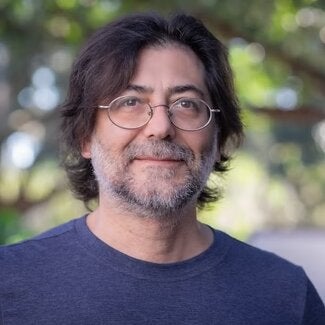
Dr. Marengo is a Professor of Physics at Florida State University since 2022. At FSU, he teaches physics and astronomy and conducts research in stellar astrophysics. Stars are the beacons that guide Dr. Marengo’s scientific exploration of the cosmos: he uses them to map the geometry and composition of the universe and to shed light on the processes shaping planetary systems beyond our own.
Dr. Marengo’s research focuses on three main areas: determining precise distances in the nearby and distant universe using pulsating stars; studying stellar populations and stellar properties; and analyzing extrasolar planetary systems and their asteroid belts. As an observational astronomer, he uses data from major ground-based observatories operated by the National Science Foundation and the European Southern Observatory, as well as NASA missions including the Hubble and Webb Space Telescopes and the upcoming Roman Space Telescope.
Before joining FSU, Dr. Marengo was a Professor of Physics and Astronomy at Iowa State University, where he developed courses in astronomy and planetary science with an emphasis on incorporating authentic research experiences into the curriculum, an approach he continues at FSU. Prior to Iowa State, he was a staff astrophysicist at the Harvard–Smithsonian Center for Astrophysics, where he worked with the team that developed and commissioned the Infrared Array Camera (IRAC) for NASA’s Spitzer Space Telescope.
Dr. Marengo studied at the Scuola Normale Superiore in Pisa, Italy, before completing his studies at the University of Torino, where he earned a degrees in Physics in 1993. He received his Ph.D. in Astrophysics from the International School for Advanced Studies (SISSA/ISAS) in Trieste, Italy, in 2000 while conducting research at the Smithsonian Astrophysical Observatory in Cambridge, Massachusetts, as a Smithsonian Predoctoral Fellow. Dr. Marengo has authored more than 400 scientific publications, including over 140 of them on peer-reviewed high impact astrophysics journals.